
Archive for the ‘Chess Wisdom’ Category
Why play chess?
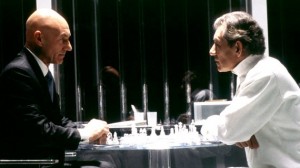
Some pretty cool people have played chess. Why join their ranks?
Millions of people all over the planet play chess, but why should you learn to play chess?
Here are a few reasons that I thought of:
- Chess is an ancient game and its cool to think that chess was played by kings and queens hundreds of years ago.
- You can play chess online with people all across the world.
- Chess a workout for your brain
- You can improve your life by applying the skills that you learn in the chess.
- Chess been played on all continents on the earth for over 1500 years.
- Chess keeps kids out of trouble and gives them a positive hobby to pursue.
- Chess never becomes outdated.
- Chess is a game where age makes no difference; its fair to have a 10 year old play a 80 year old.
- Chess is FUN!
- The size of the players makes no difference in chess; a 4 foot person can play a 7 foot person and still have it be a fair game.
- You can play chess against the computer.
- You can play chess in a park outside.
- You can play chess on a rainy day inside.
- You can play chess at the beach.
- You can play chess at the pool.
- You can play chess while waiting for an airplane or a train.
- You can play chess in a restaurant.
- You can play chess at the library.
- Chess challenges your brain and makes you smarter.
- You can play chess blindfolded in you mind.
- You can play correspondence chess and mail your moves one at a time to your partner, with games that takes years.
- Chess is a fun thing to do with your friends.
- Chess is a fun thing to do with your family.
- Chess is a great way to make new friends and meet cool people.
- Chess is not expensive.
- You can play chess fast with a clock.
- You can play a slow chess game with a clock.
- You can play chess without a clock and take your time.
- You can win money in chess tournaments.
- You can listen to music while playing chess.
- You can play many games of chess at the same time.
- Chess is always challenging, you can never “beat the game.”
- You can combine chess with other sports, like chessboxing or chessrunning.
- You can play chess with people that dont speak the same language as you.
- Chess develops memory and chess players almost never get Alzheimer.
- Chess inspires and motivates people in other aspects of their lives.
- Chess allows you to use your imagination.
- Chess improves your concentration.
- Really cool people in history have played chess.
- You can get a college scholarship for playing chess.
- You can get a job for playing chess.
- There are a lot of cool movies about chess.
- Chess helps kids improve their self esteem.
- You can play chess all your life.
- You can read many books about chess.
- Chess is a way for people to learn to practice self control.
- You can travel around the world playing in chess tournaments.
- Chess can teach people the value of patience.
- Chess is a great thing to do if your snowed in.
- You can learn a lot about yourself by playing chess.
Teen Chess Prodigy from Kampala- Phiona Mutesi

Phiona Mutesi was hungry one day when she went to a mission for food. She learned how to play chess there is not an international chess champion. Its really one of the amazing things about chess, it has no geographic or economic borders. It doesn’t require a large budget or fancy equipment, but merely the will to study, practice, and get better.
At nine she stepped foot into the US-based Sports Outreach ministry to get some free porridge and began her journey to chess stardom. At this point she had dropped out of school and was selling corn on the streets.
“We were evicted out of our house because we couldn’t afford that money. So when I heard that, I was like, ‘maybe I can also get there to know about chess and then I get a cup of porridge’, because I was hungry [at] that time,” she explained.
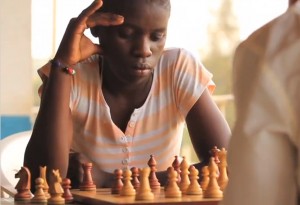
Many people in Uganda have the impression that chess is a man’s sport. Phiona Mutesi proved them wrong, showing from the beginning that she is a chess prodigy. She talks about how growing up in the slums has had a unique and positive effect on her chess game.
“I very much believe that having gone through all they go through right from childhood, figuring out how to survive on a daily basis, they do easily identify themselves with the board because when they come to play, they have still to face challenges,” Katende noted. “Devise moves, think what will be the next step, what will come after that. Which I think somehow makes them understand it better.”
The kids in Uganda don’t have chess computers and books to study from. They learn from playing each other and trying to find the best moves in any given position. They play on used chess sets and the rest of their chess equipment is far from new. This makes their style of chess playing very unique. She talks about it when she says:
“No combinations, no memorizing lines, nothing whatsoever. It’s always, think at the situation and devise the best move. Many people actually lose games to these children, simply because of that, I believe,” said Katende. “Because they expect them to play certain lines, and they don’t. They end up playing their own game.”
This is very different than how most other chess players achieve such great heights in the game. They use a lot of help from their predecessors. They study books that other chess players have written and use computers that chess players and programmers have designed to analyze their games.
Best of luck to you Phiona, I look forward to seeing your further success! ESPN also did a special on her!

How to Play Chess Like an Animal

How to Play Chess like an Animal
Ever want to play chess like a gorilla? A bird? A wolf? Guess what! You can! There’s a chess opening called the Orangutan. It starts 1. b4 for white. It’s a nontraditional opening with an animal name. The Bird is another chess opening with an animal name (although it is actually just named after a man named bird.) It starts 1. f4. It is also a fairly nontraditional opening although it is played quite often at high levels of tournament chess. There are many chess openings named after animals.
Five time Colorado state chess champion, life-master Brian Wall and I are the co-authors of a colorful, illustrated children’s chess book called How to Play Chess Like an Animal. Animal chess openings are fun for kids to learn. We got the idea to write this book when we were both teaching chess in after school chess programs in Denver, Colorado. Brian used to get the kids all excited about chess by teaching them to play the Elephant Gambit. First he would tell these young kindergardeners and first graders to get up and swing their arm like an elephant trunk. Then he would teach them to make a sound like an elephant. Then he would teach them the Elephant Gambit. To see more about chess animal openings you can click on the link. Meanwhile, keep playing chess and don’t forget to have fun!
Learning Chess from Yasser Seirawan
Day one with GM Yasser Seirawan who was the World Junior Champion in the 1970′s. He is not only a phenomenal chess player but he is also a very intriguing and interesting person who not only kept us involved and attentive during a 6 hour-long lecture but he kept us entertained as well. He told sad stories, funny stories, and often times outright ridiculous stories but somehow in the end he managed to connect it to chess in a seamless manner. This was very inspiring for me because this is a very important skill to obtain especially if one is to become a chess captain or chess coach like myself. I believe this is because it allows the audience to delve in and become a part of the lesson. Well after the lecture was completed he went on to compete against 27 individuals in a simultaneous exhibition (playing 27 people at once) including myself. As he made his first move on each board, he shook hands with each individual and he politely smiled and wished all his opponents good luck. As he was making his way towards me I was really excited to play him as he is one my role models.
He finally came around and shook my hand and then my game, along with everyone else’s, began. After 2 hour long struggle, I managed to hold a draw against Mr. Seirawan and I was quite content with the results. GM Seirawan scored 23.5/27 points. He won 20 games, drew 5 and lost 1 so overall he had a very good result. Simuls are especially fun for me to not merely play in but also watch because GM Seirawan was breezing through boards playing amazing moves in the matter of 2-3 seconds. Having a group of people also adds to the fun and excitement. All in all simuls are a great way to play in chess and have fun. I am currently a Senior at Niles North High-School and playing in this simultaneous exhibition or simul was tons of fun for me and I am definitely looking forward to the next one! Until then, this is Rafeh Qazi signing out.
3 vs. 3 Pawn Promotion Problem
When just learning how to play chess, it is important to begin to understand how to use multiple chess pieces together in combination. This doesn’t always mean different types of pieces and even with just pawns on the board a chess player can often calculate to find the best one. This is one of my favorite examples because it is simple enough that someone who just knows how to move pawns can solve it, but its complicated enough to show a beginners the beauty of using pieces together in combination.
Here we go: Imagine you have this position set up:
As you can see, both teams have only three pawns. and in this puzzle it is whites goal is to get to the other side with one pawn. How do you do this?
Give it a try first, the answer is below.
So how do we solve this problem? One important aspect is to look ahead into all the option, now just the obvious.
Lets start with the f5 pawn. If you move this pawn forward, how can black block white’s advance?
Black can just move his pawn to g6 from g7 and white cant do anything. So this doesn’t work. Lets move on.
If we move the g5 pawn to g6, is there any way to win?
The first thing to notice is that black must capture the pawn, or the pawn will capture on either h7 or f7. After black moves his h7 pawn to capture g6, can you find what white should do?
If white captures back, nothing good comes from it. Both pawns end up stuck. Look below:
So what does white do? Well, are you ready? Try it yourself first?
White should move his f5 pawn to f6. Check out the chess position below.
If black captures the pawn on f6, whites pawn on h5 has a clean file that it can get to the other side without problem. If black captures the pawn on h5, the white pawn on f6 will capture on g7 and get to the other side to win.
Hope you enjoy Dr. Connolly!
Viswanathan Anand is still the Champ!
Congratulations to Viswanathan Anand, the current world champion at Chess! He beat Boris Gelfand to defend his world title but it as not easy. Viswanathan Anand says that this was his toughest world chess title defense of his 5 and still has no plans to retire. Read more about the match here.
Acknowledging our mistakes in Chess & Life
One of the most important things that we can learn from chess is how to acknowledge our mistakes. It has hard to admit we have made a mistake, and often times its painful to look back at it…at least at first. In chess, we keep track of our games with notation and these are often times kept in a chess notebook. Sometimes, a student will rip out or cross out a game they are embarrassed of. …sometimes just stop keeping track of games once they start losing.
This is not correct to do. Losses in chess (especially emotional ones) play just as much of a part if not more than wins in shaping a chess players style of play. This doesn’t just refer to the moves that they choose to make, but often times how they act as chess players and people.
For example, if a chess player losses in 4 moves with 99% of their time left, they can learn to play slower and make sure to take the times to think about their opponents moves right from the beginning of the game. There is no need to hide this game, it is much more productive to make sure to remember it as a reminder to never repeat the same mistakes and be proud of improving as a player.
And obviously, this approach to chess can be related to life.
Teaching Kids How to Lose
At the end of each session in Chess Classes we have a friendly kids tournament; its the time for the kids to play serious chess and really show their me or their teacher what they have learned. It is a no elimination tournament with no time limits and prizes dont just go to the winners, but to everyone that has shown that they have imporved over the course of the last session of chess club.
When I look for improvement, it isn’t just in their chess games. One of the most important things that kids in our classes are taught is how to have the right attitude in competition…for many kids this means that they need to know how to lose.
Chess is a competition, and in most games there will be a winner and loser. For most kids they correlate winning to good and losing to bad. They leave a lost game or sometimes even a losing position feeling bad, upset, and negative in general. We teach the kids a much more positive approach to losing and not only makes them feel good but is also much more productive.
First of all, whether they won or lost, I want my students to be proud of the games they played. Many kids and even adults shy way from chess so the fact that they are willing to play and make tough decisions on the board that stress their brain is commendable enough. Secondly, a loss is just a chance to improve. Often times when you lose you know your mistakes, and in this case it is importantly to consciously look over them to make sure you don’t repeat them…just like in real life. If you do not know you mistakes, you can always ask your opponent. Chess players will often chat about their games afterwards and talk about different ways the game could have done depending on variations( routes that could have been taken). Over and over I see kids change their attitude to not fear losing and improve their chess skills and general attitude drastically.
All of us have dealt with losing at one point or another, and I never shy my students away from the experience. It is much easier to learn to lose over the chess board than anything else, and I make sure to mention to my students that the same approach can be used in all aspects of their lives, and hope they do. Winning gracefully is a whole another skill for another post!
Chess is a Symphony of Pieces
When teaching chess to kids its important that you find a way to explain chess theory in a way that related to them. Many kids enjoy music and even play musical instruments; so with them I try to relate chess to music.
Chess is very much like music, and a good chess game could easily be compared to a beautiful musical composition. Just think of each piece as a musical instrument. In a good musical composition all the instruments are working together create something that people would enjoy listening to. A song with just one or two musical instruments wouldn’t be as interesting and fun as one with many more.
In chess you are also creating a composition. Like a composer with his or her instruments, a good chess players uses all his or her pieces together in combination to achieve a goal. Just like a composer, a chess player’s personality shows a lot in their chess game.
Its no coincident so many musicians are also chess players, and vice versa!
Playing Top Level High School Chess by Josh Dubin
Checkmates USA | Creative Services by D1MA
