
Archive for the ‘Cool Chess Facts’ Category
Youngest Filipino Chessmaster gets title at 7 years old!
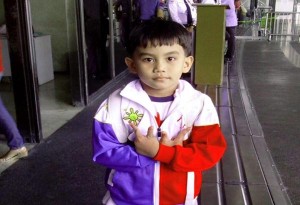
Fide Master Alekhine Nouri
Most kids at 7 years old are watching TV or playing outside, but not youthful Chessmaster Master Alekhine Nouri. He spends his time learning about chess from books and practicing his skils.
“Our daily routine features 10 hours of training; no computer games, no TV. We only ease up on Sundays,” the chess prodigy’s father and personal coach Hamed Nouri said in Filipino.
Alekhine won the title of FIDE Chess Master only 2 years after learning the game. He is the youngest FIDE Master in the world!
Brothers in Idaho Help Each Other Become Awesome in Chess!
Two Brothers are ranked the 1st and 2nd top chess players in Idaho, which isn’t such a huge surprise. The real surprise is that one of them is only 14!
Why play chess?
Some pretty cool people have played chess. Why join their ranks?
Millions of people all over the planet play chess, but why should you learn to play chess?
Here are a few reasons that I thought of:
- Chess is an ancient game and its cool to think that chess was played by kings and queens hundreds of years ago.
- You can play chess online with people all across the world.
- Chess a workout for your brain
- You can improve your life by applying the skills that you learn in the chess.
- Chess been played on all continents on the earth for over 1500 years.
- Chess keeps kids out of trouble and gives them a positive hobby to pursue.
- Chess never becomes outdated.
- Chess is a game where age makes no difference; its fair to have a 10 year old play a 80 year old.
- Chess is FUN!
- The size of the players makes no difference in chess; a 4 foot person can play a 7 foot person and still have it be a fair game.
- You can play chess against the computer.
- You can play chess in a park outside.
- You can play chess on a rainy day inside.
- You can play chess at the beach.
- You can play chess at the pool.
- You can play chess while waiting for an airplane or a train.
- You can play chess in a restaurant.
- You can play chess at the library.
- Chess challenges your brain and makes you smarter.
- You can play chess blindfolded in you mind.
- You can play correspondence chess and mail your moves one at a time to your partner, with games that takes years.
- Chess is a fun thing to do with your friends.
- Chess is a fun thing to do with your family.
- Chess is a great way to make new friends and meet cool people.
- Chess is not expensive.
- You can play chess fast with a clock.
- You can play a slow chess game with a clock.
- You can play chess without a clock and take your time.
- You can win money in chess tournaments.
- You can listen to music while playing chess.
- You can play many games of chess at the same time.
- Chess is always challenging, you can never “beat the game.”
- You can combine chess with other sports, like chessboxing or chessrunning.
- You can play chess with people that dont speak the same language as you.
- Chess develops memory and chess players almost never get Alzheimer.
- Chess inspires and motivates people in other aspects of their lives.
- Chess allows you to use your imagination.
- Chess improves your concentration.
- Really cool people in history have played chess.
- You can get a college scholarship for playing chess.
- You can get a job for playing chess.
- There are a lot of cool movies about chess.
- Chess helps kids improve their self esteem.
- You can play chess all your life.
- You can read many books about chess.
- Chess is a way for people to learn to practice self control.
- You can travel around the world playing in chess tournaments.
- Chess can teach people the value of patience.
- Chess is a great thing to do if your snowed in.
- You can learn a lot about yourself by playing chess.
Teen Chess Prodigy from Kampala- Phiona Mutesi

Phiona Mutesi was hungry one day when she went to a mission for food. She learned how to play chess there is not an international chess champion. Its really one of the amazing things about chess, it has no geographic or economic borders. It doesn’t require a large budget or fancy equipment, but merely the will to study, practice, and get better.
At nine she stepped foot into the US-based Sports Outreach ministry to get some free porridge and began her journey to chess stardom. At this point she had dropped out of school and was selling corn on the streets.
“We were evicted out of our house because we couldn’t afford that money. So when I heard that, I was like, ‘maybe I can also get there to know about chess and then I get a cup of porridge’, because I was hungry [at] that time,” she explained.
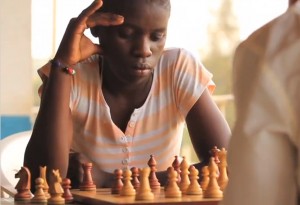
Many people in Uganda have the impression that chess is a man’s sport. Phiona Mutesi proved them wrong, showing from the beginning that she is a chess prodigy. She talks about how growing up in the slums has had a unique and positive effect on her chess game.
“I very much believe that having gone through all they go through right from childhood, figuring out how to survive on a daily basis, they do easily identify themselves with the board because when they come to play, they have still to face challenges,” Katende noted. “Devise moves, think what will be the next step, what will come after that. Which I think somehow makes them understand it better.”
The kids in Uganda don’t have chess computers and books to study from. They learn from playing each other and trying to find the best moves in any given position. They play on used chess sets and the rest of their chess equipment is far from new. This makes their style of chess playing very unique. She talks about it when she says:
“No combinations, no memorizing lines, nothing whatsoever. It’s always, think at the situation and devise the best move. Many people actually lose games to these children, simply because of that, I believe,” said Katende. “Because they expect them to play certain lines, and they don’t. They end up playing their own game.”
This is very different than how most other chess players achieve such great heights in the game. They use a lot of help from their predecessors. They study books that other chess players have written and use computers that chess players and programmers have designed to analyze their games.
Best of luck to you Phiona, I look forward to seeing your further success! ESPN also did a special on her!

Learning Chess from Yasser Seirawan
Day one with GM Yasser Seirawan who was the World Junior Champion in the 1970′s. He is not only a phenomenal chess player but he is also a very intriguing and interesting person who not only kept us involved and attentive during a 6 hour-long lecture but he kept us entertained as well. He told sad stories, funny stories, and often times outright ridiculous stories but somehow in the end he managed to connect it to chess in a seamless manner. This was very inspiring for me because this is a very important skill to obtain especially if one is to become a chess captain or chess coach like myself. I believe this is because it allows the audience to delve in and become a part of the lesson. Well after the lecture was completed he went on to compete against 27 individuals in a simultaneous exhibition (playing 27 people at once) including myself. As he made his first move on each board, he shook hands with each individual and he politely smiled and wished all his opponents good luck. As he was making his way towards me I was really excited to play him as he is one my role models.
He finally came around and shook my hand and then my game, along with everyone else’s, began. After 2 hour long struggle, I managed to hold a draw against Mr. Seirawan and I was quite content with the results. GM Seirawan scored 23.5/27 points. He won 20 games, drew 5 and lost 1 so overall he had a very good result. Simuls are especially fun for me to not merely play in but also watch because GM Seirawan was breezing through boards playing amazing moves in the matter of 2-3 seconds. Having a group of people also adds to the fun and excitement. All in all simuls are a great way to play in chess and have fun. I am currently a Senior at Niles North High-School and playing in this simultaneous exhibition or simul was tons of fun for me and I am definitely looking forward to the next one! Until then, this is Rafeh Qazi signing out.
3 vs. 3 Pawn Promotion Problem
When just learning how to play chess, it is important to begin to understand how to use multiple chess pieces together in combination. This doesn’t always mean different types of pieces and even with just pawns on the board a chess player can often calculate to find the best one. This is one of my favorite examples because it is simple enough that someone who just knows how to move pawns can solve it, but its complicated enough to show a beginners the beauty of using pieces together in combination.
Here we go: Imagine you have this position set up:
As you can see, both teams have only three pawns. and in this puzzle it is whites goal is to get to the other side with one pawn. How do you do this?
Give it a try first, the answer is below.
So how do we solve this problem? One important aspect is to look ahead into all the option, now just the obvious.
Lets start with the f5 pawn. If you move this pawn forward, how can black block white’s advance?
Black can just move his pawn to g6 from g7 and white cant do anything. So this doesn’t work. Lets move on.
If we move the g5 pawn to g6, is there any way to win?
The first thing to notice is that black must capture the pawn, or the pawn will capture on either h7 or f7. After black moves his h7 pawn to capture g6, can you find what white should do?
If white captures back, nothing good comes from it. Both pawns end up stuck. Look below:
So what does white do? Well, are you ready? Try it yourself first?
White should move his f5 pawn to f6. Check out the chess position below.
If black captures the pawn on f6, whites pawn on h5 has a clean file that it can get to the other side without problem. If black captures the pawn on h5, the white pawn on f6 will capture on g7 and get to the other side to win.
Hope you enjoy Dr. Connolly!
New Study: Chess Improves Brain Function!
Its a new a study, but old news for most of us: Chess improves brain function. Researchers at the University of Texas have concluded that playing chess broadens the mind. No suprise for those of us that teach chess, but still an interesting read.
World Chess Championship: Anand vs. Gelfand
The world chess championships are currently going on in Moscow. World champion Viswanthan Anand is battling with Israeli Chess Star Boris Gelfand. This is an intense battle over the chess board as these are the top two players in the world! If you want to take a look at their game, here is it.
A Russian Online Newspaper writes:
“Playing black for the second time in the match, Anand continued his faith in the Slav defense and yet again did not have much difficulty equalising.
It was a continuation of discussion in the second game of the match wherein Anand had gone for a fifth move surprise and yet again the World champion went for it, emphasising that it was not an opening gamble he had gone for in his first game as…”
Find more of this story here.
Insufficient Mating Chances (a technicality in chess)
I love learning something new in chess, and this is something I never knew about. Here’s the deal:
Insufficient Mating chances (or insufficient losing chances) is when a special rule that is used in tournaments. Basically, it has to do with a situation when the chess player with a winning position is almost out of time. They dont just need a winning position, but they need to have an un-winnable position. A referee is called over and the game is called a tie.
The Reason: The point here is simple, chess players want the game of chess to be decided on the moves a player makes rather than the time on the clock. If one player cannot with the game regardless of the moves that he/she makes, then why should he/she be awarded a victory. O Chess players…so righteous.
Getting out of Check
Check is one of the most, if not the most, important concepts in chess. Check means the king is in danger. This means that the player whose king is in danger MUST get their king out of check.
There are three ways that a player can get out of check
1. Move - This means to move your king out of danger.
2. Block- This means moving a piece in between your king and the piece attacking it. Note: you cannot block a check from a Knight because it skips over pieces.
3. Attack- This means you are attacking the piece that is putting your king in check. You can use your king to attack or another piece on your team.
A good chess player will look through all his/her options before deciding. In each position, the correct move may be to move, block, or attack, but you will never know until you look at all the options.
Take a look at this position, what should the white team do?
What do you think the white king should do. He can move out of the way to b1 or b2. He can also use his queen to block on a2, but the best option is to capture the rook on a7 with the queen on f2.
Checkmates USA | Creative Services by D1MA
