
Posts Tagged ‘Blog’
Youngest Filipino Chessmaster gets title at 7 years old!
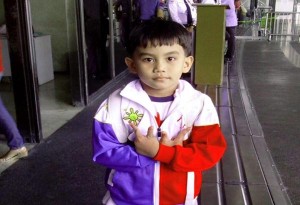
Fide Master Alekhine Nouri
Most kids at 7 years old are watching TV or playing outside, but not youthful Chessmaster Master Alekhine Nouri. He spends his time learning about chess from books and practicing his skils.
“Our daily routine features 10 hours of training; no computer games, no TV. We only ease up on Sundays,” the chess prodigy’s father and personal coach Hamed Nouri said in Filipino.
Alekhine won the title of FIDE Chess Master only 2 years after learning the game. He is the youngest FIDE Master in the world!
2013 Illinois Grades K-8 Chess Championship Tournament
The 2013 Illinois K-8 Kids Chess Championship is a fun tournament, but also very competitive. The top youth players in the state gather here (in Normal, Illinois this year) and play some very good chess. It is a multi day chess tournament from March 9th - 10th.
This year’s Illinois k-8 Chess Championship is taking place at the Illinois State University Bone Student Center at 100 North University Street in Normal Illinois.
For more info about this chess tournament check out the tournament listing.
Interview with “The Chess Queen” Alexandra Kosteniuk
Alexandra Kosteniuk is a former Women’s World Chess Champion and an great person! She promoted chess, especially chess for girls, all across the world and has motivated many kids, teens, and adults to improve their lives with chess. I had the pleasure of interviewing this very special lady and think it would be interesting for all of you to read. More Info about Alexandra can be found @ www.chessqueen.com.
George Krasnopolskiy: At what age did you learn to play chess, and from who?
Alexandra Kosteniuk: At 5 from my Dad. I was very happy that my Dad would spend so much time with me, and I always tried to make him happy by listening to his explanations on how to play chess. He would reward me for correct answers (by giving me candy and/or coins), so it was great learning chess!
George Krasnopolskiy: Who did you play chess with while growing up? Did you play mostly boys or girls? And were you afraid to play boys, or was it the other way around?
Alexandra Kosteniuk: I played chess with every one. I was lucky to grow up in Russia, as almost everyone plays chess, in parks, at school, in clubs. We used to play all together, boys and girls. In Russia boys are not afraid of girls and girls are not afraid of boys, chess is a universal game. My Dad would teach me during the week and during weekends would take me to parks and chess clubs so I could test myself against other people.
George Krasnopolskiy: Were you always good at chess?
Alexandra Kosteniuk: I started like everyone knowing nothing. But my Dad spent a lot of time training me, I would study chess at least 5 hours a day, mostly tactics solving. Chess is a fair game, the more you study, the more it will reward you with wins! In a sense it’s a great school of life, since in life it’s the same, to achieve something, you need to work hard!
George Krasnopolskiy: When did you beat your dad (or other significant chess figure in your life)?
Alexandra Kosteniuk: It’s funny, but while my dad trained me for more than 10 years since I was 5 till I became Grandmaster, and I never played a game with him, he used to quiz me with chess books. As for having proud of a win, I was very proud to have beaten a man Grandmaster (Sergey Kudrin) in 1999, when I was 15 years old. After that I have beaten many men Grandmasters in classical, rapid and blitz games.
George Krasnopolskiy: What were your other favorite activities to do, other than chess, while growing up?
Alexandra Kosteniuk: I lived like any girl, simply I had 5 hours of chess studying a day apart from school. I simply did not watch any TV, that saved a lot of time. Nowadays kids waste much too much time watching TV. Imagine how much you could achieve if you simply did not watch TV. I used to go out for sports, with friends, singing karoke, skating, going to movies, etc.
George Krasnopolskiy: What is your favorite chess quote?
Alexandra Kosteniuk: Tarrasch: Chess, like love, like music, has the power to make men happy.
George Krasnopolskiy: What do you like most about chess?
Alexandra Kosteniuk: It’s fair. If you win, you deserve the win, if you lose, it’s your fault, and you can learn to play better next time. You can always get better at chess. Also, it’s a great game to meet new people and make friends. Thanks to chess, I have travelled to dozens of new countries, learned new languages, have many international friends!
George Krasnopolskiy: How do you feel chess has helped you in your life? Are there any specific situations you can think of?
Alexandra Kosteniuk: Sure, chess makes it easier for me to think logically and to come out with a decision. It has helped develop my memory, and my problem-solving abilities. Chess helps concentrate and find the main elements in an issue to be resolved. Chess teaches you to uses all your assets, not to waste efforts, and to have a plan.
George Krasnopolskiy: What did you want to be when you were a kid? Work/ Profession wise.
Alexandra Kosteniuk: Since I was very young I was a chess champion (at 8 Moscow champion, at 12 girls world champion), so I never actually thought of doing anything apart from chess. When you do well, why change and start a career from scratch?
George Krasnopolskiy: You are not just a chess player, but also a model and a mother; are there any other goals in your life you are still trying to pursue?
Alexandra Kosteniuk: I love to do all kinds of new things and to always be learning new subjects. In life it’s important to be flexible, you never know what you will like in the future and how good you’ll be at it. So don’t be afraid, try!

Learning Chess from Yasser Seirawan
Day one with GM Yasser Seirawan who was the World Junior Champion in the 1970′s. He is not only a phenomenal chess player but he is also a very intriguing and interesting person who not only kept us involved and attentive during a 6 hour-long lecture but he kept us entertained as well. He told sad stories, funny stories, and often times outright ridiculous stories but somehow in the end he managed to connect it to chess in a seamless manner. This was very inspiring for me because this is a very important skill to obtain especially if one is to become a chess captain or chess coach like myself. I believe this is because it allows the audience to delve in and become a part of the lesson. Well after the lecture was completed he went on to compete against 27 individuals in a simultaneous exhibition (playing 27 people at once) including myself. As he made his first move on each board, he shook hands with each individual and he politely smiled and wished all his opponents good luck. As he was making his way towards me I was really excited to play him as he is one my role models.
He finally came around and shook my hand and then my game, along with everyone else’s, began. After 2 hour long struggle, I managed to hold a draw against Mr. Seirawan and I was quite content with the results. GM Seirawan scored 23.5/27 points. He won 20 games, drew 5 and lost 1 so overall he had a very good result. Simuls are especially fun for me to not merely play in but also watch because GM Seirawan was breezing through boards playing amazing moves in the matter of 2-3 seconds. Having a group of people also adds to the fun and excitement. All in all simuls are a great way to play in chess and have fun. I am currently a Senior at Niles North High-School and playing in this simultaneous exhibition or simul was tons of fun for me and I am definitely looking forward to the next one! Until then, this is Rafeh Qazi signing out.
3 vs. 3 Pawn Promotion Problem
When just learning how to play chess, it is important to begin to understand how to use multiple chess pieces together in combination. This doesn’t always mean different types of pieces and even with just pawns on the board a chess player can often calculate to find the best one. This is one of my favorite examples because it is simple enough that someone who just knows how to move pawns can solve it, but its complicated enough to show a beginners the beauty of using pieces together in combination.
Here we go: Imagine you have this position set up:
As you can see, both teams have only three pawns. and in this puzzle it is whites goal is to get to the other side with one pawn. How do you do this?
Give it a try first, the answer is below.
So how do we solve this problem? One important aspect is to look ahead into all the option, now just the obvious.
Lets start with the f5 pawn. If you move this pawn forward, how can black block white’s advance?
Black can just move his pawn to g6 from g7 and white cant do anything. So this doesn’t work. Lets move on.
If we move the g5 pawn to g6, is there any way to win?
The first thing to notice is that black must capture the pawn, or the pawn will capture on either h7 or f7. After black moves his h7 pawn to capture g6, can you find what white should do?
If white captures back, nothing good comes from it. Both pawns end up stuck. Look below:
So what does white do? Well, are you ready? Try it yourself first?
White should move his f5 pawn to f6. Check out the chess position below.
If black captures the pawn on f6, whites pawn on h5 has a clean file that it can get to the other side without problem. If black captures the pawn on h5, the white pawn on f6 will capture on g7 and get to the other side to win.
Hope you enjoy Dr. Connolly!
Minooka Chess Tournament
Minooka Chess Club and CheckmatesUSA
present the first ever

Minooka Area Chess Tournament
Sunday, April 15, 2012 (1pm to 4:30pm)
Minooka Village Community Room
121 East McEvilly Rd. (Next to Creamery)
* * * * * * * * * * * * * * * * * * * * * * * * * * * * * * * * *
Entry fee: $10 with advance registration, $15 on-site
Sections: Juniors (K-8) and Open (All ages)
Juniors = 4 rounds, Open = G/30, 3 rounds
For more information, please contact [email protected]
Or call Brian Quast at (815) 922-9291
Chess is a Symphony of Pieces
When teaching chess to kids its important that you find a way to explain chess theory in a way that related to them. Many kids enjoy music and even play musical instruments; so with them I try to relate chess to music.
Chess is very much like music, and a good chess game could easily be compared to a beautiful musical composition. Just think of each piece as a musical instrument. In a good musical composition all the instruments are working together create something that people would enjoy listening to. A song with just one or two musical instruments wouldn’t be as interesting and fun as one with many more.
In chess you are also creating a composition. Like a composer with his or her instruments, a good chess players uses all his or her pieces together in combination to achieve a goal. Just like a composer, a chess player’s personality shows a lot in their chess game.
Its no coincident so many musicians are also chess players, and vice versa!
The Pin
The Pin is a very important tool that every chess player should have in his or her repertoire. The word pin literally means that something cannot move. For example, if a poster is pinned to wall, it cannot move. In wrestling, a pin is when your opponent cant move. In chess, a pin is when a piece cannot move.
Creating a pin in chess can be useful, but it does not always win a piece. Above, the King from A1 can move to B2 to protect the Knight. Whenever you know a chess piece cannot move, it is always a good idea to put pressure on it, and attack it with more chess pieces.
The Bishop from H6 can move to G7 to pin the Knight. The King is expected to protect it by moving to B2. The Black player can then win the knight by attacking it with the pawn on B5 by moving it to B4. The white player then does not have to defend the white knight, and cannot move it either because it is pinned. Remember: when a piece is pinned, take advantage of it by putting pressure on the pin.
Insufficient Mating Chances (a technicality in chess)
I love learning something new in chess, and this is something I never knew about. Here’s the deal:
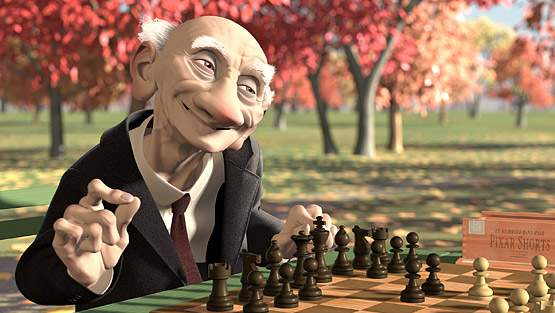
Insufficient Mating chances (or insufficient losing chances) is when a special rule that is used in tournaments. Basically, it has to do with a situation when the chess player with a winning position is almost out of time. They dont just need a winning position, but they need to have an un-winnable position. A referee is called over and the game is called a tie.
The Reason: The point here is simple, chess players want the game of chess to be decided on the moves a player makes rather than the time on the clock. If one player cannot with the game regardless of the moves that he/she makes, then why should he/she be awarded a victory. O Chess players…so righteous.
Cool Chess Boards: Cold War Chess Chess
My cousin from Russia seems to be able to find me the coolest chess sets; this one is no exception. It is a colorful, wooden chess set made under the theme of the cold war. The cold war chess set is a collectors set and probably not the best to play on. Still, it is nice to keep around. As you can see each piece is designed with detail and is quite comical.
Checkmates USA | Creative Services by D1MA
