
Posts Tagged ‘learning chess’
Why play chess?
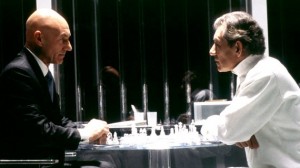
Some pretty cool people have played chess. Why join their ranks?
Millions of people all over the planet play chess, but why should you learn to play chess?
Here are a few reasons that I thought of:
- Chess is an ancient game and its cool to think that chess was played by kings and queens hundreds of years ago.
- You can play chess online with people all across the world.
- Chess a workout for your brain
- You can improve your life by applying the skills that you learn in the chess.
- Chess been played on all continents on the earth for over 1500 years.
- Chess keeps kids out of trouble and gives them a positive hobby to pursue.
- Chess never becomes outdated.
- Chess is a game where age makes no difference; its fair to have a 10 year old play a 80 year old.
- Chess is FUN!
- The size of the players makes no difference in chess; a 4 foot person can play a 7 foot person and still have it be a fair game.
- You can play chess against the computer.
- You can play chess in a park outside.
- You can play chess on a rainy day inside.
- You can play chess at the beach.
- You can play chess at the pool.
- You can play chess while waiting for an airplane or a train.
- You can play chess in a restaurant.
- You can play chess at the library.
- Chess challenges your brain and makes you smarter.
- You can play chess blindfolded in you mind.
- You can play correspondence chess and mail your moves one at a time to your partner, with games that takes years.
- Chess is a fun thing to do with your friends.
- Chess is a fun thing to do with your family.
- Chess is a great way to make new friends and meet cool people.
- Chess is not expensive.
- You can play chess fast with a clock.
- You can play a slow chess game with a clock.
- You can play chess without a clock and take your time.
- You can win money in chess tournaments.
- You can listen to music while playing chess.
- You can play many games of chess at the same time.
- Chess is always challenging, you can never “beat the game.”
- You can combine chess with other sports, like chessboxing or chessrunning.
- You can play chess with people that dont speak the same language as you.
- Chess develops memory and chess players almost never get Alzheimer.
- Chess inspires and motivates people in other aspects of their lives.
- Chess allows you to use your imagination.
- Chess improves your concentration.
- Really cool people in history have played chess.
- You can get a college scholarship for playing chess.
- You can get a job for playing chess.
- There are a lot of cool movies about chess.
- Chess helps kids improve their self esteem.
- You can play chess all your life.
- You can read many books about chess.
- Chess is a way for people to learn to practice self control.
- You can travel around the world playing in chess tournaments.
- Chess can teach people the value of patience.
- Chess is a great thing to do if your snowed in.
- You can learn a lot about yourself by playing chess.
Acknowledging our mistakes in Chess & Life
One of the most important things that we can learn from chess is how to acknowledge our mistakes. It has hard to admit we have made a mistake, and often times its painful to look back at it…at least at first. In chess, we keep track of our games with notation and these are often times kept in a chess notebook. Sometimes, a student will rip out or cross out a game they are embarrassed of. …sometimes just stop keeping track of games once they start losing.
This is not correct to do. Losses in chess (especially emotional ones) play just as much of a part if not more than wins in shaping a chess players style of play. This doesn’t just refer to the moves that they choose to make, but often times how they act as chess players and people.
For example, if a chess player losses in 4 moves with 99% of their time left, they can learn to play slower and make sure to take the times to think about their opponents moves right from the beginning of the game. There is no need to hide this game, it is much more productive to make sure to remember it as a reminder to never repeat the same mistakes and be proud of improving as a player.
And obviously, this approach to chess can be related to life.
Perpetual Check
Have you ever heard the chess term perpetual check and wondered what is was? Like most chess terms it isnt hard to figure out: a perpetual check is a position in which one player is constantly repeated the same series of checks and his/her opponent has no options to do anything else. In a perpetual check position the game ends in a draw. Note that in some chess position the player that is being checked may have a choice to get out of the perpetual check but may leave themselves in a worse position, in which case they will most likely choose to end the game in a draw.
Look at the position below: can you find the correct move to force the perpetual check?
We have just added two new Perpetual Check Chess Practice Puzzle Worksheets to our Online Resource. Give them a try for additional practice.
Chess Openings: The Petrov Defense
Alexander Petrov
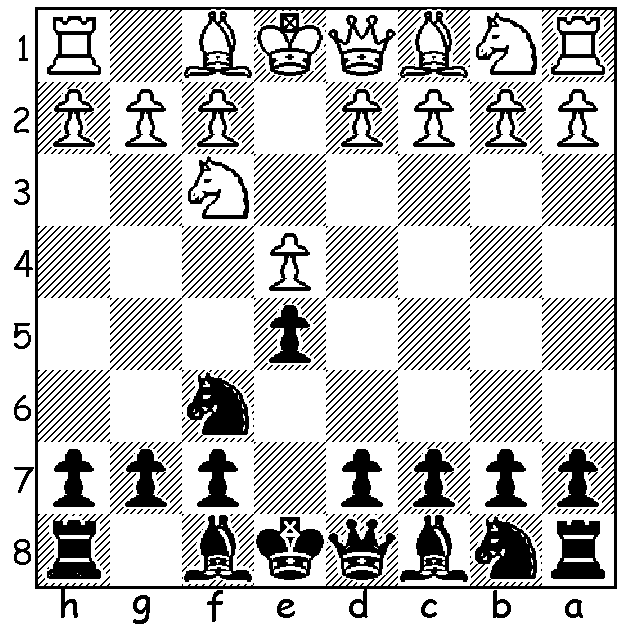
I often teach the Petrov Defense when explaining to my students how to beat an opponent that is copying their moves, because that’s what the first few moves of the Petrov Defense are (the Trap is how to beat your opponent if they continue to copy you.) The Petrov Defense was first made popular by Alexander Petrov. Alexander Petrov was a Russian chess player in the Mid 19th Century, which is why this game is often called the Russian Game. Some of the world top chess players such as Karpov, Yusupov, Marshall, Kramnik, and Pullsbury has used the Petrov Defense when playing as black.
You can find many famous chess games that chess players have played using the Petrov Defense. The Petrov Defense is an opening that leads to many draws because of the symmetrical positioning of many of the pieces. You can read about the Petrov Defense or Watch a Video on it, but make sure you learn it and not fall for its traps!
Finding the Perfect Chess Board to Play On

Having a good chess board is essential to enjoying a quality game of chess. Often times beginners are charmed by the looks of Wizard Chess Boards, Stone Chess Boards, Glass Chess Boards, and end up frustrated during the game. For a beginning chess player, it is very important to pick a chess set that will be easy on the eyes and have the player spend no time at all distinguishing between pieces and squares.
You want to buy a chess set with large squares that are both dark and light. Colors such as dark green, dark blue, and brown have been shown to help kids focus on the chess board. I would also suggest using a set with chess coordinates around the edges. This will help your child learn the coordinate system, which will help them a lot in life as well as in the chess world.
Lastly, make sure the pieces are large and distinguishable. You want to make sure you can tell the difference with ease and spend almost no time looking over what each piece is.
Checkmates USA | Creative Services by D1MA
