
Posts Tagged ‘Learning’
Chess Tournament this Saturday!
This Saturday we will be having a kids chess tournament at Elk Grove Village Library from 1:30 - 3:00. All kids from grades k- 6th are welcome to come, even beginners! Kids will be separated into two sections: Beginners and Intermediate/ Advanced. Everyone will leave with a prize and first place will leave with an even COOLER PRIZE!
Residents of Elk Grove can register now, while residents of other townships will have to wait until Friday to register. The library can be reached at 847-439-0447.
Castling in Chess
Castling is a unique and special move in chess. Castling is one of the three main goals in the opening of the game and you SHOULD do it in every game you play. Castling is the one time in a chess game that you can move two pieces at the same time!
Why would you castle? Well…just think of the word. Chess is a medieval battle and the castle is where the King goes to stay safe.
You should know that there are two ways to Castle: Kingside and Queenside. Chess Players are very logical and therefore you probably correctly assumed that Castling Kingside is going towards the rook on the King’s Side. The Queenside Castle is towards the side of the Queen. Because castle is such an important and special move in chess there are some special rules that a player must obey in order to castle.
Rule #1: To castle in chess you need to make sure that you have moved all the pieces in between the King and the Rook on the side you want to castle to.
This Player is ready to Castle Queenside. Notice that it takes longer to be able to castle queenside bause there are more chess pieces in the way.
Rule #2: To castle in chess you need to make sure that your King is not in Check and will not travel through check.
Rule #3: To castle in chess you need to make sure that your King and Rook (that you are castling with) have not moved. If either piece has moved you lose the ability to castle.
Finally, if your King and Rook have not moved, your King is not in check and will not travel through it, and there are no chess pieces in between the King and the Rook, then you can castle. Move your King two square and bring the rook around him. You final Castle should look like this:
Free Chess Classes at Des Plaines Library!
CheckMates Chess Academy will be holding a series of chess classes for kids of various ages and levels at the Des Plaines Library. Kids Chess Classes start will he held on October 8th and 15th. The beginning chess class, which will go over how to play chess including how the pieces move as well as check and checkmate, will be held from 1:00 - 2:30 pm. The strategies chess class will be held from 2:45- 4:15 pm. The strategies class is for kids who already know the rules to chess and want to learn tactics to improve their game as well as fun alternative chess games.
On October 22nd there will be a Kids Chess Tournament where all the kids who participated in chess classes can show off their new skills. Kids who could not come to the classes are also welcome to come; the kids chess tournament will be from 2:00 - 4:00 pm.
The Friends of the Des Plaines Library have sponsored these events and makes it FREE for all the participants! Space is limited, call the Des Plaines Library at 827-5551 to register now!
Chess Openings: The Petrov Defense
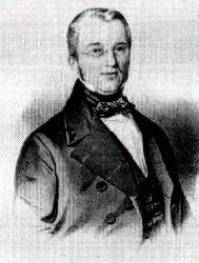
Alexander Petrov
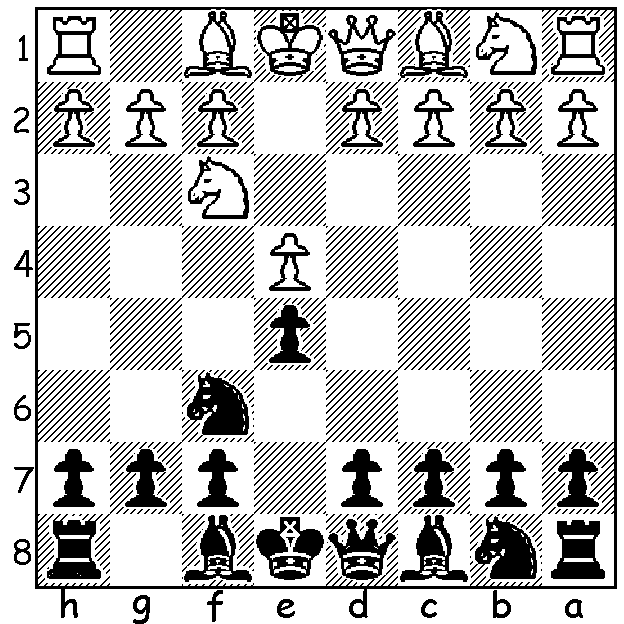
I often teach the Petrov Defense when explaining to my students how to beat an opponent that is copying their moves, because that’s what the first few moves of the Petrov Defense are (the Trap is how to beat your opponent if they continue to copy you.) The Petrov Defense was first made popular by Alexander Petrov. Alexander Petrov was a Russian chess player in the Mid 19th Century, which is why this game is often called the Russian Game. Some of the world top chess players such as Karpov, Yusupov, Marshall, Kramnik, and Pullsbury has used the Petrov Defense when playing as black.
You can find many famous chess games that chess players have played using the Petrov Defense. The Petrov Defense is an opening that leads to many draws because of the symmetrical positioning of many of the pieces. You can read about the Petrov Defense or Watch a Video on it, but make sure you learn it and not fall for its traps!
The Minority Attack


The minority attack in chess is a rather advanced strategic concept. But that’s ok, even if you are a kid or a beginner. First of all, you can impress your friends when you walk around talking about the minority attack. If they don’t know what it is they might just nod and pretend they do, or if they do know what it is their eyebrows will go up and they will say “aha!” and think, wow, this kid really knows chess! So either way it’s great!
The minority attack in chess is simple to explain though. It is when you have a smaller group of pawns in an area of the chess board than your opponent and you begin storming your opponent’s larger pawn mass with your smaller one. And why should you do it? Well, for the same reason a poodle attacks a great dane! And sometimes the great dane looks at the tiny barking noisy animal and thinks maybe I better not mess with it! But there’s more reason. To open lines for your pieces to attack, and when you open lines for your pieces you often find tactics. You are also weakening your opponent’s pawns too, after which you might give up one to win two, if you can visualize that. For example if they capture your pawn they might double theirs, and you can win them by placing a rook on the file. Or if they just let you exchange they might end up with a backward pawn, or a pawn that isn’t protected by another pawn, and that can’t move forward without being captured.
Chess Books for Beginners
There are a lot of books about chess, not surprising considering that chess is over 1500 years old. There are many chess books that would help a child’s chess game, here are a few:
5334 Problems, Combinations, and Games by Laszlo Polgar and Bruce Pandolfini- This is a great chess book that I recommend for players of all levels. This has sooooooo many chess problems in it for chess players of all different levels that you can keep it around for years, solving chess puzzles and going back to it again and again.
303 Tricky Chess Tactics by Fred Wilson and Bruce Alberston- This is a chess book that goes over chess tactics for all different levels. A challenging training tool, these tricky tactical chess problems are not only fun to solve, but great for beginners, intermediate, and expert players to use as tools to improve their chess game. Chess Tactics are presented in order of difficulty, so that players can advance from simple to complex chess positions. Examples from actual chess games illustrate a wide range of chess tactics from the classics right up to the current games. You’ll learn to use pins, single and double forks, double attacks, skewers, discovered and double checks, multiple threat tactics-and other crushing tactics as part of their problem-solving chess challenges.
The Knight’s Pattern and How the Knight Moves in Chess
The Knights look like horses, and kids are tempted to call them that. I always tell the kids that the Knight is the warrior that rides on top of the horse, and that calling his by the name of an animal is an insult. Each team has two knights and they go next to the rooks. For white, they go on b1 and g1, for black they go on b8 and g8.

The Knights in their Starting Positions
Every chess piece in chess has a distinct pattern that it moves and attacks by. No chess piece has a more unique and interesting pattern than the Knight. The Knight is the only chess piece that can skip over other pieces! The pattern that it moves by is often described as a “L” Shape, but I like to teach it as a “1″, “2″, “1″ pattern. The Knight moves two squares in any direction, then rotates 90 degrees and goes one more square. The knight moves “1″, “2″, rotates, and moves “1″.
The “Fast Break” in Chess
The Chicago Bulls are deadly on the fast break! The fast break consists of a basketball team having an advantage in players as they transition on the floor. Take a moment to think which fast break would be better?
A 5 on 4?
A 4 on 3?
A 3 on 2?
or a 2 on 1?
Any basketball player would agree that a 2 on 1 advantage on the fast break is the best. Any mathematician would agree as well. That is because when you are attacking the hoop (like Derrick Rose) with a 2 on 1 advantage, you have a 200% advantage. Compare that to a 150% advantage with a 3 on 2 and only a 133% advantage with a 4 on 3. In chess, like in basketball, you need to capitalize on the advantage before the position changes; hence the Fast Break.
So how do chess players use this information to help them win. Well…When a chess player has the material advantage in the chess game (this means that a player has more chess pieces than their opponent) it is advantageous for them to create even trades. An even trade could be a pawn for a pawn, a knight for a knight, a bishop for a knight, or any trade where a piece of equal value is captured by each team. The less pieces that are left on the chess board, the more that players advantage grows!
If you have the advantage, make sure you capitalize on the Fast Break on the Chess Board before the position changes.
Creating a Passed Pawn in Chess
The most important rule about passed pawns to know is that two connected passed pawns, if you can get them to the sixth rank, are worth seven points. It’s as if suddenly an extra rook appeared on the board for you, if you can get them there. It can be worth a piece sacrifice to get them there, and you will suddenly find your opponent willing to do just about anything to get rid of them, including sacrificing his own pieces. If you have a pawn majority, meaning you have one more pawn than your opponent, then, so long as they are not doubled, you can create a passed pawn if they are pushed far enough up the board (ie. especially the sixth rank). Because then if you have to sacrifice a pawn to get your opponent’s pawn out of the way, you get to queen your pawn. And since you’re closer to the eighth rank, you queen first. So even if your opponent gets a passer, he won’t be able to queen it. For a very instructive game about pawns on the sixth, take a look at Grigory Serper vs Ioannis Nikolaidis 1993 St. Petersburg Open.
Chess Language- “CheckMate”

The chess phrase CheckMate - to attack (a chess opponent’s king) in such a manner that no escape or defense is possible, thus ending the game - by some theories comes from the Persian phrase ’shah mat,’ translating into ‘the king is defeated.’
Checkmates USA | Creative Services by D1MA
